
The ARM Institute Champion program recognizes ARM Institute Members who have gone above and beyond the call of membership to strengthen US manufacturing through robotics, physical AI, and workforce development while advocating for the ARM Institute’s mission! ARM Champions are recognized annually at a celebratory dinner during our Annual Member Meeting, our premier members-only event that convenes representatives from across our member consortium for three days of networking, knowledge-sharing, and collaboration.
This year, we started monthly highlights of our ARM Institute Champions to connect you better to their work, inspire you on how you might be able to take action on further collaboration with us, and help you meet your fellow Members.
This month’s Champion feature centers on Xu Chen, Faculty Member in Mechanical Engineering at the University of Washington! Xu has been a long-time ARM Institute Member and has been involved in both ARM Institute Technology Projects, as well as national education/workforce development programs.
Get to know Xu in the interview below, learn how you can collaborate with the University of Washington, explore Xu’s insights into why ARM Institute Technology Projects are different, hear what he’s looking forward to at our 10th Annual Member Meeting, and more.
Our 2026 class of Champions will be recognized at our 10th Annual Member Meeting taking place Nov. 17-19 in Pittsburgh, PA.
To start, can you tell us a bit about your background and your work at the University of Washington?
Thank you for inviting me to this conversation. My name is Xu Chen. I am a faculty member in Mechanical Engineering at the University of Washington, where I hold the Bryan T. McMinn Endowed Professorship, direct the Mechatronics, Automation, and Control Systems (MACS) Laboratory, and lead the College of Engineering’s robotics education and research visioning initiatives. I earned my bachelor’s degree from Tsinghua University and my M.S. and Ph.D. in Mechanical Engineering from UC Berkeley. My work sits at the intersection of dynamic systems, mechatronics, controls, and robotics, with a focus on developing the algorithms and physical processes that enable intelligent machines to operate reliably in the real world.
I also direct the Boeing Advanced Research Collaboration (BARC), which brings UW faculty and students together with Boeing engineers to translate research into aerospace manufacturing and assembly applications. The collaboration recently marked ten years of joint research, and the partnership has been extended for another decade. Across BARC, College of Engineering initiatives, and my own lab, we work with government and industry partners—including ARM, Boeing, Amazon, Microsoft, and GE Research—on areas such as automated inspection, tactile manipulation, precision manufacturing, and physical AI.
How and why did you get involved in the ARM Institute?
I became involved with the ARM Institute in 2018 because its mission addresses one of the central challenges in academic robotics: moving promising ideas from the laboratory into practical manufacturing environments. The ARM Institute’s emphasis on making robotics, autonomy, and AI more accessible to U.S. manufacturers closely aligns with my own goal of developing adaptive, deployable manufacturing systems.
Early in my involvement, I helped coordinate UW’s participation in the Pacific Northwest and contributed to efforts that led to two major multi-institution technology and workforce projects. That experience showed me the value of the ARM Institute’s national network and helped establish UW as a regional partner for advanced robotics in manufacturing.
Can you tell us about your experience with ARM Institute technology projects and how they’re different from non-ARM Institute-funded projects?
My experience with ARM Institute technology projects has been highly rewarding. I served as principal investigator for the Automated Defect Inspection of Complex Metallic Parts project, which developed a robotic system for GKN Aerospace to inspect reflective, geometrically complex metal surfaces. By integrating adaptive lighting, automated path planning, and machine learning, the system achieved defect-detection rates above 95 percent—15 to 20 percentage points higher than human inspection rates. In April 2022, our team was selected as one of five projects—and the only one involving an academic team—to demonstrate its work in person to federal defense leaders and evaluators at ARM’s headquarters as part of the ARM Institute’s first core contract renewal.
I have also contributed to the Large Metallic Sanding and Finishing project and the Uniform Work Robotic Sanding with Intrastage Inspection project, and I led the Robotic Inspection and Data Foundry project to expand a shared surface-image resource for the ARM community. Across these efforts, the common objective has been to develop technology that is not only innovative, but also robust and practical enough to move toward use on the factory floor.
That transition focus is what most clearly distinguishes ARM Institute projects from many traditional academic research projects. ARM Institute projects begin with a concrete manufacturing need and are shaped jointly by universities, manufacturers, small businesses, and federal stakeholders. The milestones emphasize integration, validation, technology-readiness progression, and measurable value to the end user. Publications remain important, but they are part of a broader goal: delivering technology that manufacturing partners can adopt and scale.
Your work with the ARM Institute has been across both the technology and education/workforce sides of our organization. The University of Washington even has an Endorsed Training program on RoboticsCareer.org! Can you tell us about why you pursued ARM Institute Endorsement and the value you’ve found in it?
Technology and workforce development have to advance together. Even the most capable robotic system will have limited impact without people who understand how to deploy, operate, maintain, and improve it. That belief has shaped both my ARM Institute involvement and my work at UW. Through an ARM Institute project, I had the opportunity to lead a regional effort with partners in Washington, Oregon, Montana, Idaho, and Alaska to map robotics training resources for manufacturing across the Pacific Northwest, which played a major role in the data collection for RoboticsCareer.org. That experience gave me a clearer understanding of how regional capabilities and workforce needs fit into the broader national robotics and manufacturing landscape. Just as importantly, it created lasting connections among educators, manufacturers, and workforce-development partners that have continued well beyond the project.
At UW, the same philosophy informs our Master of Science in Robotics and Graduate Certificate in Applied Robotics. These programs combine a rigorous, cross-disciplinary foundation with project-based learning and direct industry engagement, so that students develop both technical depth and an understanding of real deployment constraints.
Pursuing ARM Institute Endorsement was a natural extension of that commitment. The endorsement provides an independent signal that a training program is aligned with the skills manufacturers need, while RoboticsCareer.org gives the program national visibility. For students, it clarifies the connection between their education and career opportunities. For employers, it provides confidence that graduates have been prepared with relevant, practice-oriented competencies.
2026 will mark the 10th iteration of our Annual Member Meeting, taking place Nov. 17-19 in Pittsburgh as a members-only event. Can you tell us what you look forward to most at this event each year?
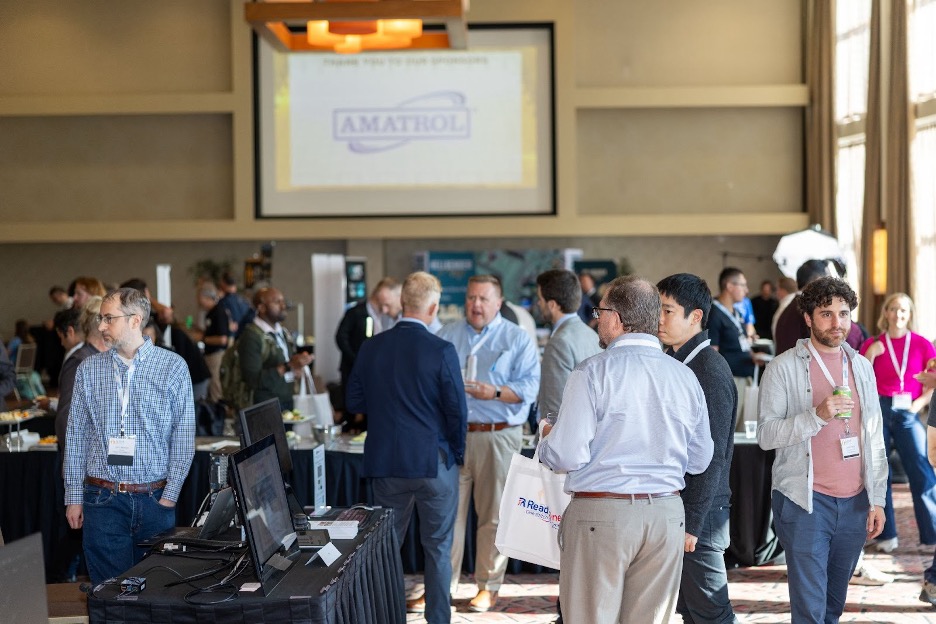
What I value most is the opportunity to reconnect with the full ARM Institute community in one place. The Annual Member Meeting brings together researchers, federal sponsors, manufacturers, technology providers, and startups, all of whom view the same challenges from different but complementary perspectives.
I have participated in several ARM Institute member events, including panels on technology transition and AI and machine learning in manufacturing. Those conversations are especially valuable because they move easily between long-term research questions and immediate implementation needs. The ARM Institute’s staff and leadership are also consistently generous with their time and insights. That combination of technical exchange and relationship-building is what I look forward to each year.
What would you like other ARM Members to know about how they can collaborate with the University of Washington?
UW is eager to work with ARM members on both technology development and workforce preparation. We have strong capabilities in mechatronics, controls, automated inspection, advanced composites, tactile and visual perception, physical AI, and additive manufacturing. Through facilities and programs such as BARC, our robotics education programs, the Advanced Composites Center, and emerging robotics research initiatives, we have established pathways for bringing university researchers, students, and industry engineers together around shared problems.
There are several ways to engage with us. We would welcome opportunities to partner with ARM members on joint proposals and sponsored research, particularly in robotics for manufacturing and aerospace applications. Members can also work with our faculty and students through capstone projects, internships, and recruiting. They can help us shape workforce programs by co-developing short courses, professional and graduate certificates, and industry-informed project experiences.
The best collaborations begin with a clearly defined need and a willingness to develop the solution together. If an ARM member has a robotics or manufacturing challenge that could benefit from automated inspection, advanced controls, intelligent sensing, or workforce development, we would be very glad to start that conversation.
Join Xu & Thousands of Other Experts in Strengthening US Manufacturing
ARM Institute Members lead the way to a future where people and robots work together to respond to our nation’s greatest challenges and to develop and produce the world’s most desired products. By becoming a member of our 500+ member organization consortium, you’ll join thousands of subject matter experts in building the future of US manufacturing through robotics, AI, and workforce innovations. Your membership to our robotics institute unlocks not only access to member-exclusive events and webinars, including our Annual Member Meeting, but also project funding opportunities, project outputs, networking, a digital platform for collaboration, and more.
Join our consortium
2026 ARM Institute Member Meeting
Register today for our 10th Annual Member Meeting taking place Nov. 17-19 in Pittsburgh, PA. Our Annual Member Meeting convenes experts from across our consortium for three days of networking, knowledge-sharing, and collaboration. This event is open only to ARM Members. Join our consortium to gain access to this unique event.
Thank you to our Platinum Members: GE Vernova, Northrop Grumman, and Siemens, our 10th Anniversary Presenting Sponsors Corsha and the Italian Trade Agency, as well as our event sponsors AMT – The Association For Manufacturing Technology, fivestar*, GridRaster Inc., ReadyOne Industries, RPI’s Center for Smart Convergent Manufacturing Systems, Tronix3D, and Yaskawa Motoman for supporting our event!
ABOUT THE ARM INSTITUTE
The ARM (Advanced Robotics for Manufacturing) Institute is a Manufacturing Innovation Institute (MII) funded by the Office of the Secretary of War under Agreement Number W911NF-17-3-0004 and is part of the Manufacturing USA® network. The ARM Institute leverages a world class consortium of 500+ member organizations and partners across industry, academia, and government to assert the US as the leading nation in manufacturing output through the adoption of robotics and AI. Based in Pittsburgh, PA since 2017, the ARM Institute has a dual focus on catalyzing innovative yet practical robotics and physical AI solutions while growing and preparing the US workforce for advanced manufacturing careers.
For more information, visit www.arminstitute.org and follow the ARM Institute on LinkedIn