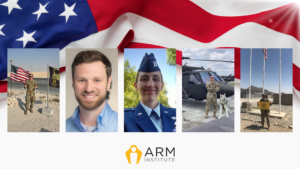
On Veterans Day, and every day, the ARM Institute recognizes and celebrates the individuals across our organization and member consortium who have served or continue to serve in the U.S. military.
Our commitment to supporting our nation’s warfighters is reflected throughout our work, from bringing together our member consortium to advance and strengthen the Organic Industrial Base (OIB) and support military readiness, to helping service members explore new career opportunities through our national workforce resource, RoboticsCareer.org.
This Veterans Day, we’re proud to spotlight several members of our own team who have served or continue to serve. Their military experiences have helped shape the skills, leadership, and dedication they bring to the ARM Institute every day. Whether they’re supporting our organization’s operations, developing and testing robotics systems, or leading collaborative projects with our members, these individuals continue to put the lessons they’ve learned through service to work every day at the ARM Institute.
Get to know our team members, hear about their experiences in the military, and discover how their service continues to influence the work they do today!
JT Elensky, Director of Finance & Accounting

Broadly, can you tell our readers about your military background?
I joined the Air Force Reserves in 2012 and served as a C-130 Crew Chief until 2018. In 2019 our base transitioned airframes to the C-17 Globemaster and I was moved into the Section Chief role for the Home Station Check. I just recently transitioned to the C-17 System Program Office at Robins AFB in GA where I will work on fleet sustainment.
What is one lesson from your military service that you still carry with you today?
If you’re not 15 minutes early, you’re late.
What skills or experiences from your military career have been especially valuable in your work at the ARM Institute?
The biggest skill is the ability to problem solve. You’re faced daily with small issues that need an abstract thought process to solve.
What do you wish more people understood about veterans and the skills they bring to the civilian workforce?
Veterans are committed to getting the job done and if you give them something difficult, they will always find a way to complete it.
Is there a person, experience, or moment from your military service that had a lasting impact on you?
There are really too many to count, but the best experience is always that first hug with your kids when you get back from an overseas deployment.
Eric Heisler, Robot Test Technician
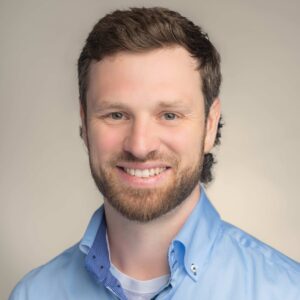
Broadly, can you tell our readers about your military background?
I was honorably discharged as a Sergeant after serving five years in the Marine Corps as a communications technician with the 13th Marine Expeditionary Unit.
What made you feel compelled to serve in the military? How did you select your branch?
My Grandpa was in the Navy/Air Force Reserves for a combined 25+ years. After hearing all his experiences, it sounded like a unique adventure that could set me up with a career as an alternative to continuing education after high school. I chose the Marine Corps because of the pride they take in themselves and their branch. Being a Marine wasn’t just a job, it’s a lifestyle.
How did your time in the military prepare you for life outside of service, specifically your position at the ARM Institute?
“Improvise, Adapt and Overcome” was a common phrase we used in the Marine Corps. If you didn’t know something, you had to learn what you needed to whether it’s professionally or personally. Being a communications technician taught me troubleshooting skills that I learned to implement across platforms I had never worked on before which I was eventually able to exercise on automation once I got out of the Marine Corps.
What advice do you have for others who are considering joining the military?
Get comfortable being uncomfortable.
What advice do you have for those transitioning out of the military?
Civilian life can be less structured, create your own routines that are going to set you up for success. “Idle hands are the devils workshop.”
Tasha Miller, Director of Technology Programs
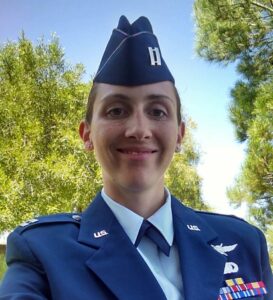
Broadly, can you tell our readers about your military background?
I joined the Air Force right out of college having no idea what I was getting into, went to Officer Training School one week after getting married. In the Air Force, I worked as a developmental engineer leading efforts for new Air Force systems including as an electronic warfare flight test engineer for the F-35.
What made you feel compelled to serve in the military? How did you select your branch?
I was looking for adventure, challenge, and growth at the time. The Air Force offered all three.
How did your time in the military prepare you for life outside of service, specifically your position at the ARM Institute?
The Air Force delivered abundantly on the challenge and growth goals by giving me strong mentors, vast opportunities, and a purpose greater than myself. I left Active Duty a much better version of myself.
What advice do you have for those transitioning out of the military?
It is going to feel weird not wearing a uniform everyday, for a long time. You will miss the camaraderie and culture, but just know wherever you land – you have the opportunity to help create a culture that has some of the same fundamentals of camaraderie, trust, passion, and integrity.
Ryan Reaghard, Technology Programs Manager
Broadly, can you tell our readers about your military background?
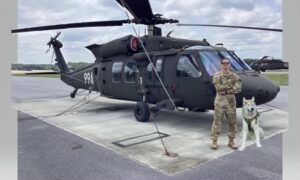
I have been serving in the Pennsylvania Army National Guard for 16 years and counting. I began my military career as an enlisted combat engineer while attending college. Later, I joined the ROTC program at the University of Pittsburgh and commissioned as an Ordnance officer, serving in a variety of logistics and support roles. I eventually transitioned into aviation and became a UH-60 Black Hawk pilot, a role in which I currently serve.
What is one lesson from your military service that you still carry with you today?
One of the most important lessons I’ve learned is that growth, and often the most rewarding experiences, happen outside of your comfort zone. As someone who has never been particularly fond of heights, the military has given me opportunities to jump out of airplanes, rappel from helicopters, and now fly them. That mindset ultimately inspired me to take on the exciting new opportunity to join the ARM Institute.
What skills or experiences from your military career have been especially valuable in your work at the ARM Institute?
One of the most valuable experiences has been learning how to work with diverse groups of people to achieve a common goal. Throughout my military career, I’ve had the opportunity to collaborate with individuals from many different backgrounds. That experience has translated directly to my work at ARM, where we regularly execute projects alongside team members with diverse backgrounds including government stakeholders, technical experts, and end-user operators.
What do you wish more people understood about veterans and the skills they bring to the civilian workforce?
While some military technical skills may not directly translate to civilian roles, veterans bring a wide range of highly valuable soft skills. Experience working on diverse teams, effective communication, planning, adaptability, leadership, and time management are all strengths that can make a significant impact in any organization.
Is there a person, experience, or moment from your military service that had a lasting impact on you?
My brother has had the greatest impact on my military journey. We had the opportunity to serve in the same unit, and he gave me my first salute during my commissioning ceremony. Without his guidance and encouragement, I may never have joined the military in the first place.
Russell Wanke, Senior Technology Programs Manager

Broadly, can you tell our readers about your military background?
I graduated from West Point with a B.S. in Chemical Engineering and commissioned as an Army Infantry Officer. I served as a Platoon Leader and Company Executive Officer in the 82nd Airborne Division (Fort Bragg, NC) and as Company Commander in Fort Benning, GA. I transitioned to the Army Reserves after about 7 years in active duty. My primary role in the Reserves is observing and evaluating mobilizing units, specifically in Infantry and Engineer tactics, and in the systems and processes for staffs at the Battalion and Brigade level. I am still serving in the Army Reserves today and am approaching almost 10 years as an Army Officer.
What is one lesson from your military service that you still carry with you today?
My time in the military taught me to never miss a chance to make someone else’s job easier. I still default to two questions: ‘how do I make the people around me more effective’ and ‘what can I take off others’ plates?’ That mindset has helped me learn far more than I would have otherwise, and it’s the fastest way I’ve found to build trust with teammates.
What skills or experiences from your military career have been especially valuable in your work at the ARM Institute?
My military background involved a lot of mission planning, especially in high-tempo situations. This has been valuable as a program manager at ARM in scoping complex problems and managing competing deadlines. In the military, I got used to translating between operators and planners. It’s the same muscle at ARM because you are helping industry, researchers, and the government actually hear each other to solve the same problems but from different perspectives. I also learned that you don’t need to be the expert in the room if you are willing to ask challenging, thoughtful questions, and dedicate your time learning from others. That’s how I strive to work with our PIs and project teams.
What do you wish more people understood about veterans and the skills they bring to the civilian workforce?
I wish more people understood that hiring a veteran is not just about the stereotype of discipline. It is about someone who is experienced in joining new teams, rapidly learning the established systems, and then making it better. Veterans are used to solving ambiguous problems and building efficient processes under real constraints. The character traits that people expect from veterans, like accountability, integrity, and work ethic are real. However, what is often missed is how fast many veterans can integrate with the team, learn the mission, and improve how the work gets done.
Is there a person, experience, or moment from your military service that had a lasting impact on you?
I often think about the times when things did not go as planned. The military emphasizes ‘after-action reviews’ where you are honest about what went wrong, get the chance to be your own hardest critic, and have the opportunity to change the process so you don’t repeat it. I try to take this same retrospective approach in my personal and professional life.
ABOUT THE ARM INSTITUTE
The ARM (Advanced Robotics for Manufacturing) Institute is a Manufacturing Innovation Institute (MII) funded by the Office of the Secretary of War under Agreement Number W911NF-17-3-0004 and is part of the Manufacturing USA® network. The ARM Institute leverages a world class consortium of 500+ member organizations and partners across industry, academia, and government to assert the US as the leading nation in manufacturing output through the adoption of robotics and AI. Based in Pittsburgh, PA since 2017, the ARM Institute has a dual focus on catalyzing innovative yet practical robotics and physical AI solutions while growing and preparing the US workforce for advanced manufacturing careers.
For more information, visit www.arminstitute.org and follow the ARM Institute on LinkedIn