Project Highlight: Refined Automated Production of Inflatable Devices (RAPID)
Updated March 25, 2026
Despite textiles being one of the largest industries globally, textiles are still primarily produced through manual processes and off-shore manufacturing. While these operations are ripe for automation, further investment is needed to bridge the gap between R&D innovations and impact for manufacturers. The use of textiles extends far beyond industry and consumer use with the Department of War/Defense leveraging textiles for supplies like life preservers, tents, uniforms, PPE, and other supplies needed to support our warfighters.
The ARM Institute has catalyzed several technology projects centered on the advancement of robotics in textile manufacturing, from sewing the pockets of jeans to automating the production of masks in shipping containers to be used at the Point-of-Need.
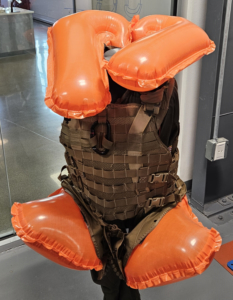
The ARM Institute Refined Automated Production of Inflatable Devices (RAPID) Project builds on these concepts by focusing on the automated production of life preservers.
Project Team
Kennon Products (Principal Investigator), Square One Systems, and the Industrial Sewing and Innovation Center (ISAIC)
Problem Statement & Industry Need
The textile market is pervasive and critically important, both for general consumers and the Department of Defense. Currently, textile manufacturing is primarily completed overseas with much of the work still being completed manually. Even the limited textile manufacturing that does occur in the U.S. predominantly uses manual labor. Reliance on off-shore textile fabrication combined with a manufacturing worker shortage in the U.S. puts our textile supply chains at great risk. Automation and robotic solutions working in collaboration with human counterparts are needed to address these gaps.
Over the past several years, the ARM Institute has funded many projects that have worked on robotic solutions for textile fabrication. The most recent robotics projects have built on prior outputs and leveraged best practices and lessons learned to significantly advance state-of-the-art robotic solutions in this area.
The ARM Institute’s Refined Automated Production of Inflatable Devices (RAPID) led by Kennon Products with Square One Systems and the Industrial Sewing and Innovation Center (ISAIC), specifically sought a robotic solution for the manufacturing of inflatable emergency life preservers (specifically LPU-21) for Navy Aviation (NAVAIR). While the use case for this project was specific, life preservers are just one of the many textile products the Department of Defense (DoD) leverages. The outputs from this project have the potential to advance the manufacturing of other textile goods both for the Department of Defense and the industry at large.
Project Approach
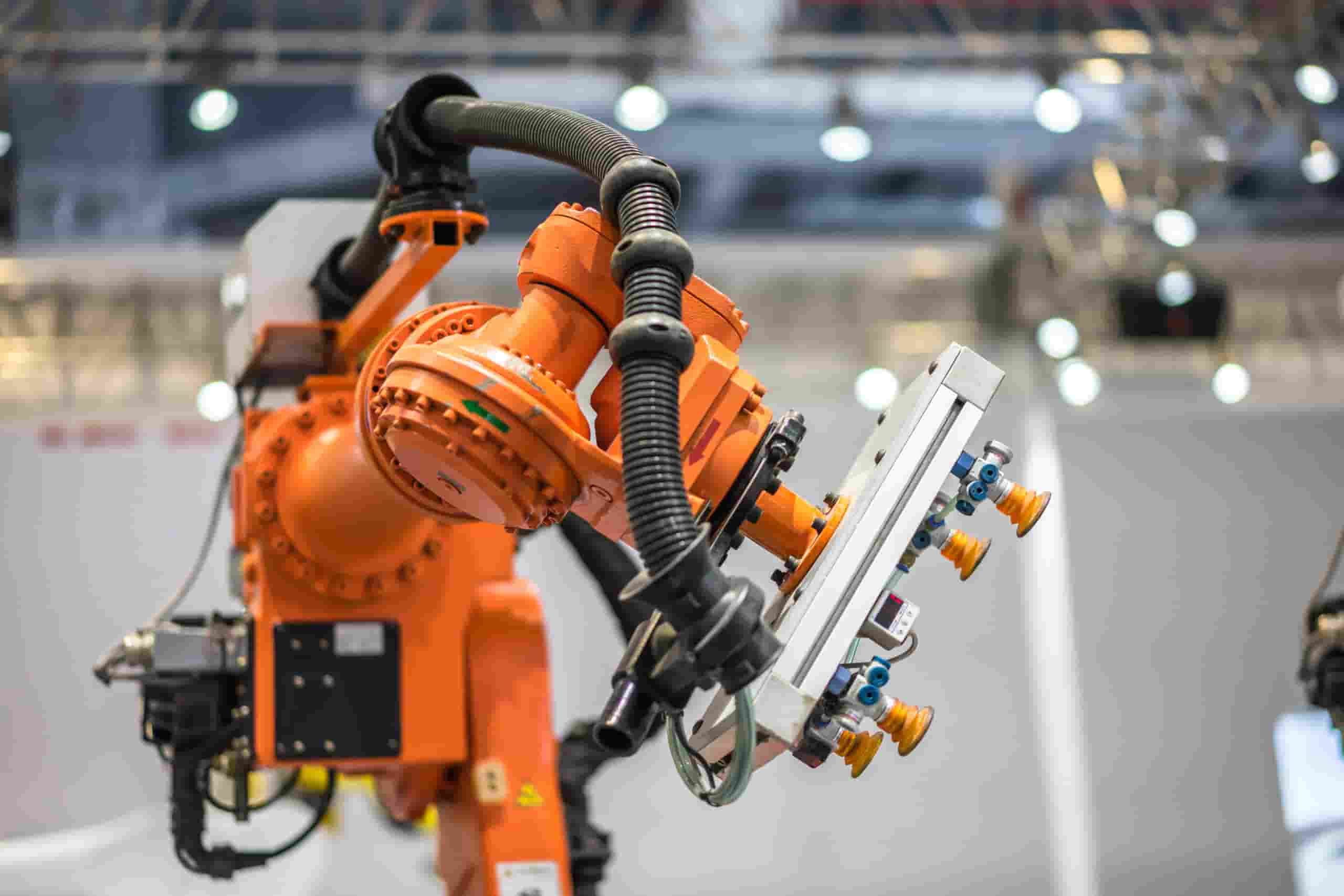
The RAPID project aimed to significantly reduce manual labor and improve quality assurance through the use of robotics in the manufacturing of life preservers. To do this, the project centered on three work elements:
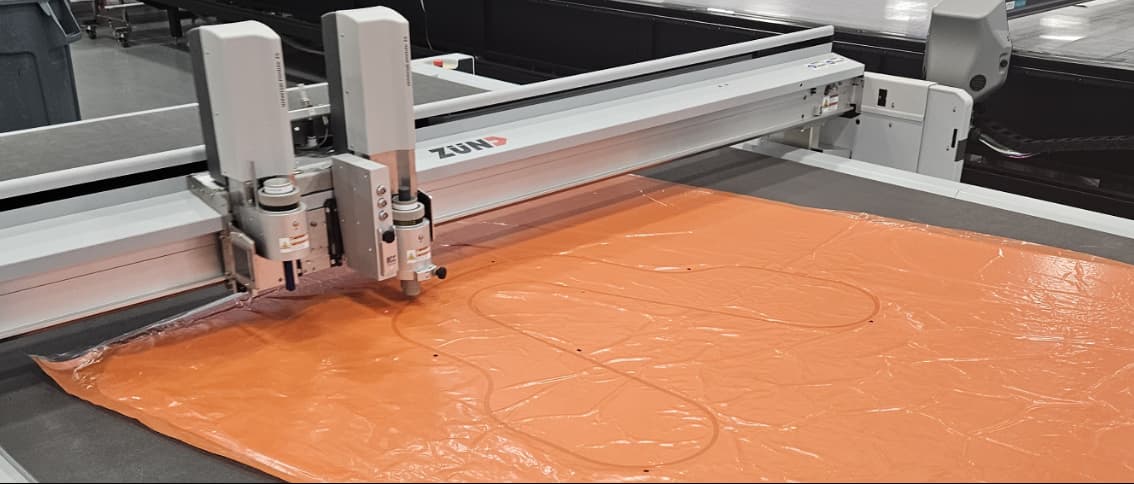
1. Design and integrate an automated laser welder with an automated pick and place (P&P) system, adding a vision system for part location and quality assurance.
2. Scale and make operational the system for larger production volumes, and assessing its ability to do so
3. Build in an Education and Workforce Development (EWD) training and work instructions element.
In addition to leveraging outputs from prior ARM Institute projects centered on robotic textile manufacturing, the team also leveraged prior work from NAVAIR and AFFOA (Advanced Functional Fabrics of America), one of the ARM Institute’s fellow DoD Manufacturing Innovation Institutes under the Manufacturing USA umbrella.
Impact & Results
The initial system was built and the project completed in a total of 32 weeks and resulted in
- 50% reduction in production time
- Reduced cost, training time, and scrap
- Greater consistency in production steps with improved quality
Phase two of this project centered on repairing the laser fiber optic cable, re-designing the end-of-arm-tooling (EOAT) to eliminate cable failure, the design and implementation of a standalone spray system for auxiliary parts, updating software with video training modules and enhanced screens, and a successful test of the RAPID table.
The precision and delicate seaming provided by the RAPID system and laser welding allows construction with very light and thin materials. This functionality could lead to many other use cases in specialized and/or light/thin personal wear, such as medical and clean room applications, intimate wear, sporting goods, sportswear, stretchwear, footwear, and recreational products such as tents, shelters, kites, parafoils, and sails. The flat table automation developed in RAPID could also be applied to large form factors such as awnings, shelters, environmental retention barriers, and others.
Additionally, the apparel we wear is largely designed around what sewers and sewing machines can accomplish and build efficiently. The creation of new systems, such as the one built in the RAPID project, enables new textiles designs.
“Kennon is looking to push the boundaries of ultra-lightweight textile manufacturing technology to better serve the men and women protecting our country. We are honored to partner with the ARM Institute and the other Manufacturing Innovation Institutes to break down the barriers keeping our warfighters from having the best technology available.” -Thomas Bushnell PE, Kennon Products
Next Steps
Exploration for expanding the system for use in additional LPU opportunities and other inflatable applications such as rafts, beam structures and FOD plugs are underway at Kennon to further grow the impact of this project.
The ARM Institute and our nearly 500 member organization consortium work to assert the US as the leading nation in manufacturing output through the adoption of robotics and physical AI and by connecting the workforce to high-value careers. Want to contribute to this work? Explore membership here or email us at [email protected].
Explore membership
Join our mailing list
ABOUT THE ARM INSTITUTE
The ARM (Advanced Robotics for Manufacturing) Institute is a Manufacturing Innovation Institute (MII) funded by the Office of the Secretary of Defense/War under Agreement Number W911NF-17-3-0004 and is part of the Manufacturing USA® network. The ARM Institute leverages a unique and robust consortium of nearly 500 member organizations and partners across industry, academia, and government to make robotics, autonomy, and artificial intelligence more accessible to U.S. manufacturers large and small, train and empower the manufacturing workforce, strengthen our economy and global competitiveness, and elevate national security and resilience. Based in Pittsburgh, PA since 2017, the ARM Institute’s mission is to assert the US as the leading nation in manufacturing output through the adoption of robotics and AI. For more information, visit www.arminstitute.org and follow the ARM Institute on LinkedIn and X.